Oral extended-release nitroglycerin capsules in 2.5 mg and 6.5 mg strengths, used to help prevent angina attacks in adults. We offer package sizes from 30 to 360 capsules with pharmacist-backed support for Canadian customers.
This tool only estimates pack size from the values you enter.
×
You need: 21 capsRecommended packs: 1 x 30 = 30 caps
Manufacturers
Time-Cap Labs
Payment & Shipping
Package Example
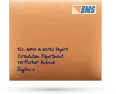
Your order is securely packed and usually ships within 24 hours. Here is what a typical parcel looks like.
It is about the size of a regular letter (24x11x0.7 cm) and does not show any details of what is inside.
Front View
Side View
Back View
Shipping Times
Shipping Method
Estimated delivery
Express Free for orders over C$421.63
Estimated delivery to Canada: 4-7 days
Standard Free for orders over C$281.09
Estimated delivery to Canada: 14-21 days
Payment Methods
Discount Coupons
Victoria Day - May 18, 2026 8%VICTORIA8
Canada Day - July 1, 2026 10%CANADADAY10
Labour Day - September 7, 2026 6%LABOUR6
Thanksgiving (Canada) - October 12, 2026 9%THANKS9
Boxing Day - December 26, 2026 12%BOXING12
Brand Names
Also known as (by country):
Country
Brand Names
United States
Nitro-Time
FAQ
A prescription is required to buy nitroglycerin oral capsules from local pharmacies in Canada. Our store policy allows you to place an order without a prescription and have the medicine sent by mail.
Avoid alcohol while taking nitroglycerin extended-release capsules. Alcohol can increase the blood-pressure-lowering effect and raise the risk of dizziness, light-headedness, or fainting.
The manufacturer of the supplied product may vary. The manufacturer's name is shown on the product packaging.
Nitroglycerin extended-release capsules are used to help prevent angina attacks caused by coronary artery disease. They are for ongoing prevention and are not intended to relieve sudden chest pain or an acute angina attack.
Headache is common with nitroglycerin. Flushing, dizziness, light-headedness, nausea, and low blood pressure can also occur, especially when standing up quickly. Seek urgent care for fainting, severe weakness, trouble breathing, or chest pain that is new, severe, or not improving.
Description
Nitroglycerin extended-release capsules are an oral nitrate medicine used to help prevent attacks of angina pectoris, the chest discomfort that develops when the heart muscle briefly does not receive enough oxygen-rich blood. We supply this exact formulation as capsules taken by mouth in 2.5 mg and 6.5 mg strengths. Because it is a preventive, long-acting product rather than a fast-acting rescue treatment, it works best as part of a broader, prescriber-guided angina management plan. The sections below explain how it works, how it is generally used, and how it compares with other nitrate options.
What Nitroglycerin Extended-Release Capsules Are
Nitroglycerin belongs to the organic nitrate class of vasodilators. The extended-release capsule formulation is designed to release the active ingredient gradually after swallowing, so blood levels rise and fall more smoothly than they would with a fast-acting sublingual tablet or spray. This makes the capsule suited to routine, scheduled prevention of angina episodes rather than to relief of chest pain that is already underway. We stock it as an oral capsule only, in 2.5 mg and 6.5 mg strengths, and this is the identity that applies throughout this page: an extended-release oral nitroglycerin capsule, not a sublingual tablet, spray, patch, or ointment.
Angina and Why Nitrate Prevention Matters
Angina pectoris occurs when narrowed or spasming coronary arteries limit blood flow to the heart muscle during exertion, stress, cold exposure, or sometimes at rest. The discomfort is often described as pressure, tightness, or heaviness in the chest, and it may radiate to the arm, jaw, or back. Recurrent angina can also be a marker of underlying coronary artery disease or reduced coronary reserve. Long-acting nitrate therapy is one option clinicians use, often alongside beta-blockers, calcium channel blockers, or antiplatelet medicines, to reduce how often these episodes occur and how much they limit daily activity.
How Nitroglycerin Works in the Body
Nitroglycerin is converted in vascular smooth muscle into nitric oxide, which activates guanylate cyclase and raises intracellular cyclic GMP. This relaxes smooth muscle in veins more than arteries, reducing venous return to the heart and lowering left ventricular preload. The heart then works with less wall tension and lower oxygen demand, while nitroglycerin's effect on coronary vessels can also improve blood flow to oxygen-starved areas of the myocardium. The combined result is fewer and milder angina episodes for many patients, along with a modest reduction in blood pressure from arterial relaxation at higher exposure.
What the Evidence Shows
Organic nitrates have been used in ischemic heart disease for well over a century, and their hemodynamic effects are well characterized in controlled studies. Clinical experience and pharmacologic trials consistently show reduced anginal frequency with regular long-acting nitrate use, although long-acting nitrates are primarily symptom-relieving medicines and have not been shown to reduce cardiovascular mortality. A well-recognized limitation, seen across nitrate formulations including extended-release capsules, is pharmacologic tolerance: continuous, unbroken nitrate exposure can blunt the vasodilating response within as little as 24 to 48 hours. For this reason, prescribers typically build a daily low-nitrate interval into the dosing schedule, often overnight, to help preserve effectiveness.
Active Ingredient and Capsule Formulation
The active ingredient is nitroglycerin itself, classified pharmacologically as a nitrate vasodilator and antianginal agent (ATC code C01DA02). The extended-release formulation slows the release and absorption of nitroglycerin during gastrointestinal transit, in contrast to the rapid absorption of a sublingual tablet or spray. Bioavailability and clinical response can vary between patients, and the gradual-release oral route is used specifically for scheduled prevention rather than acute relief.
Established Uses
The recognized use for this exact product is the prevention, rather than the immediate treatment, of angina pectoris in adults. It is not intended to stop an angina attack that has already started, a role generally filled by fast-acting sublingual nitroglycerin. Extended-release oral nitroglycerin may form part of a broader antianginal regimen for patients with chronic stable angina, alongside other treatment and risk-reduction measures selected by a prescriber.
Available Strengths and General Dosing Principles
We offer nitroglycerin extended-release capsules in 2.5 mg and 6.5 mg strengths, in package sizes of 30, 60, 90, 120, 180, 270, or 360 capsules, allowing customers to match an order to an existing prescription and expected duration of use. In general clinical practice, extended-release nitroglycerin is started at a dose selected by the prescriber and adjusted according to symptom control and tolerability. The timing of doses should provide a daily low-nitrate interval, commonly overnight, because continuous exposure can promote tolerance and reduce the medicine's effect. The exact schedule, strength, and titration for any individual must follow the prescriber's instructions. The capsules are usually swallowed whole with water and may be taken with or without food; taking them consistently in relation to meals can help reduce variation in absorption.
Elimination and Half-Life
Nitroglycerin is metabolized rapidly by enzymatic denitration into partially active and inactive metabolites, which are subsequently eliminated primarily through the kidneys. The parent compound's plasma half-life is very short, generally in the range of just a few minutes. The extended-release formulation sustains delivery over the dosing interval even though nitroglycerin itself is cleared rapidly from the bloodstream.
Important Safety Information
Nitroglycerin's blood-pressure-lowering effect is central to both its benefit and its main risks. Postural drops in blood pressure can cause dizziness, light-headedness, or fainting, particularly when standing up quickly, after alcohol use, or in hot conditions. Because these effects can appear without warning, driving or operating machinery should be approached cautiously until an individual knows how the medicine affects them. Older adults, people who are dehydrated, and those already taking other blood-pressure-lowering medicines may be more sensitive to these effects and may need closer monitoring during initiation or dose changes.
Getting Nitroglycerin Through Our Pharmacy
Nitroglycerin oral capsules are classified as a prescription medicine in Canada, reflecting their status as a cardiac medicine that benefits from medical supervision. Separately, our ordering process for this listing does not require a prescription to be submitted before we accept an order, so customers can move through checkout without uploading one in advance. We encourage anyone using nitroglycerin for angina to do so under a physician's guidance, and our pharmacist-supported team is available 24/7 by email, online chat, or phone to answer practical questions about an order. We have not confirmed a current Health Canada authorization that exactly matches this nitroglycerin capsule product and its offered strengths; readers seeking confirmation can search the Drug Product Database by product name, strength, and dosage form.
Who Should Not Take Nitroglycerin
Nitroglycerin is contraindicated in anyone with known hypersensitivity to nitroglycerin or to the capsule's other ingredients. It must not be combined with phosphodiesterase type 5 inhibitors, such as sildenafil, tadalafil, or vardenafil, because the combination can cause a severe, potentially life-threatening drop in blood pressure. It is also contraindicated with soluble guanylate cyclase stimulators such as riociguat. Nitroglycerin is generally avoided in severe anemia, increased intracranial pressure, significant hypotension, or uncorrected low blood volume because further vasodilation could worsen these conditions.
Interactions With Other Medicines
Beyond phosphodiesterase type 5 inhibitors and soluble guanylate cyclase stimulators, nitroglycerin's blood-pressure-lowering effect can be intensified by alcohol, other antihypertensive drugs, calcium channel blockers, beta-blockers, and diuretics, increasing the risk of symptomatic hypotension or fainting. Anyone taking medicines for erectile dysfunction, pulmonary hypertension, or other cardiovascular conditions should discuss the full list with a prescriber before starting nitroglycerin, since interactions are not always predictable from medicine names alone.
Side Effects and When to Seek Help
Headache is the most common adverse effect of nitroglycerin, related directly to its vasodilating action, and it often lessens after the first days of regular use. Flushing, light-headedness, and mild dizziness are also common, especially early in treatment or after a dose increase. Less commonly, some people notice a fast heartbeat or nausea.
Ordinary effects: headache, flushing, mild dizziness, and a transient fast heartbeat.
Effects that call for prompt medical attention: fainting, severe or persistent dizziness, chest pain that worsens or does not settle, or signs of a significant allergic reaction such as facial swelling or difficulty breathing.
Anyone experiencing severe or worsening symptoms, or chest pain that differs from their usual pattern, should seek urgent medical assessment rather than waiting to see if it passes.
Overdose and Toxicity
Nitroglycerin overdose primarily produces exaggerated vasodilation: profound hypotension, reflex tachycardia, severe headache, visual disturbance, confusion, and, in serious cases, methemoglobinemia, which can impair oxygen delivery in the blood. Signs such as bluish skin discolouration, marked breathlessness, or loss of consciousness after taking more capsules than intended represent a medical emergency requiring immediate attention. Anyone who suspects an overdose, or who has taken nitroglycerin along with a contraindicated medicine such as a phosphodiesterase type 5 inhibitor, should seek emergency care right away rather than waiting for symptoms to resolve on their own.
Storage
Store nitroglycerin extended-release capsules at 20°C to 25°C in a tightly closed container, protected from light and moisture, and out of the reach of children. Nitroglycerin is sensitive to unsuitable storage conditions, so capsules should not be left in a car, bathroom cabinet, or another location prone to heat, humidity, or temperature swings. Any capsules that are discoloured, past their expiry date, or no longer needed should be disposed of through a pharmacy take-back program rather than household waste.
Benefits and Trade-offs
The main benefit of the extended-release oral capsule is convenience: a scheduled, swallowed dose that supports ongoing angina prevention without the frequent dosing intervals or local irritation sometimes associated with topical nitrate forms. Its main trade-offs are the tendency toward nitrate tolerance with continuous use, the need for a daily low-nitrate interval to preserve effectiveness, and its unsuitability for treating an angina attack that is already happening, a role better suited to fast-acting sublingual or spray nitroglycerin. Choosing between formulations generally comes down to whether prevention or rapid relief is the treatment goal, and prescribers may use more than one nitroglycerin form for these complementary purposes.
Generic Equivalents and Similar Medicines
Nitroglycerin is available in several delivery forms beyond the oral extended-release capsule we offer, each suited to a different clinical purpose. Related nitroglycerin brands such as Nitrostat (sublingual tablets), Nitrolingual (translingual spray), Nitro-Dur (transdermal patch), and Nitro-Bid (topical ointment) share the same active ingredient but differ in onset, duration, and intended use; Rectiv is a topical nitroglycerin ointment used for a different indication, chronic anal fissure pain, rather than for angina. Other long-acting nitrates, including isosorbide dinitrate and isosorbide mononitrate, work through the same nitric oxide pathway and may be selected as alternatives for angina prevention. Beta-blockers such as metoprolol act through a different mechanism and may be combined with nitrate therapy as part of a broader angina management plan.
Form
Typical onset
Typical role
Oral extended-release capsule (our listing)
Gradual, over roughly 30 to 60 minutes
Scheduled prevention of angina
Sublingual tablet or spray
Within 1 to 3 minutes
Relief of an active angina attack
Transdermal patch
Gradual, over about 30 to 60 minutes
Daytime prevention with a scheduled removal period
Topical ointment
Gradual, within about 30 to 60 minutes
Prevention, applied to the skin at scheduled intervals
Because these forms are not interchangeable in dose or purpose, switching between them should always be guided by a prescriber. We keep our own catalogue focused on the exact oral extended-release nitroglycerin capsule described on this page, in the 2.5 mg and 6.5 mg strengths and package sizes listed above, so that customers can order confidently against a known, consistent product.
My package arrived in Trois-Rivieres after very cold weather. What should I check before I use the capsules?
A
Answered by Support team
Check that the package and container are intact, dry, and properly closed, and inspect the capsules for visible damage or unusual changes. Store them at 20°C to 25°C, protected from light and moisture.
Q
Asked by Julia C, Guelph, Canada
I am in Guelph. Can I use my postal code to see whether these capsules can be shipped to my address before I order?
A
Answered by Support team
Enter the full address and postal code during checkout to see the shipping options we offer for your destination before ordering.
Q
Asked by Jordan W, Whitehorse, Canada
I live in Whitehorse and delivery options can be limited here. How can I find out whether you can send these capsules to my address?
A
Answered by Support team
Use your complete delivery address and postal code at checkout. We will display the delivery options available for that destination before you complete the order.
Q
Asked by Nicole R, Oshawa, Canada
My capsule package did not include a leaflet. What information should I check before taking it?
A
Answered by Support team
Leaflet inclusion and language can vary. Check the package label for nitroglycerin, the prescribed strength, the extended-release capsule dosage form, the manufacturer, lot number, and expiry date. If the label does not clearly identify the product or instructions, do not use it until the discrepancy is resolved.
Q
Asked by Lily N, Windsor, Canada
I take these capsules regularly for angina prevention and forgot my morning dose. Should I take two capsules later today?
Do not take two doses at once to make up for a missed dose. In general, take the missed dose when remembered unless it is nearly time for the next scheduled dose, then skip it and resume the usual schedule. Follow the dosing instructions provided for your regimen.
Product specifications
Active ingredient
Nitroglycerin
Drug class
Nitrate vasodilator (antianginal)
Dosage form
Extended-release capsule
Available strengths
2.5 mg, 6.5 mg
Route
Oral
Storage
Store at 20°C to 25°C in a tightly closed container, protected from light and moisture.
ATC code
C01DA02
Regulatory information
Canadian Market AuthorizationNitroglycerin is fully authorized for human medical use across Canada.
Prescription RequirementA valid prescription from a licensed healthcare professional is required to dispense nitroglycerin extended-release capsules.