Accutane capsules deliver oral isotretinoin in five strengths, from 5 mg to 40 mg, and we supply them in pack sizes designed to match a prescribed acne treatment course.
This tool only estimates pack size from the values you enter.
×
You need: 21 tabsRecommended packs: 1 x 30 = 30 tabs
Manufacturers
Almirall HermalCipher PharmaceuticalsDifa CooperDouglas Pharmaceuticals LtdF. Hoffmann-La RocheIsdinLaboratoires ExpanscienceMylan PharmaceuticalsPierre Fabre DermatologieSun Pharmaceutical IndustriesTeva Pharmaceuticals USA, Inc.
Payment & Delivery
Package Example
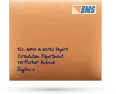
Your order is securely packed and usually dispatched within 24 hours. Here is what a typical parcel looks like.
It is about the size of a regular letter (24x11x0.7 cm) and does not show any details of what is inside.
Front View
Side View
Back View
Delivery Times
Delivery Method
Estimated delivery
Express Free for orders over £225.62
Estimated delivery to the UK: 4-7 days
Standard Free for orders over £150.42
Estimated delivery to the UK: 14-21 days
Payment Methods
Discount Coupons
New Year's Day - 1 January 2026 9%NEWYEAR9
Valentine's Day - 14 February 2026 6%VALENTINE6
St David's Day - 1 March 2026 4%DAVID4
St Patrick's Day - 17 March 2026 5%PATRICK5
St George's Day - 23 April 2026 4%GEORGE4
May Day - 1 May 2026 5%MAYDAY5
Halloween - 31 October 2026 6%HALLOWEEN6
Guy Fawkes Night - 5 November 2026 5%GUY5
Christmas Eve - 24 December 2026 9%XMASEVE9
Christmas Day - 25 December 2026 10%XMAS10
Boxing Day - 26 December 2026 10%BOXING10
New Year's Eve - 31 December 2026 8%NYE8
Brand Names
Also known as (by country):
Country
Brand Names
United Kingdom
Roaccutane
Australia
OrataneRoaccutane
Canada
ClarusEpuris
United States
AbsoricaClaravis
FAQ
A prescription is required to obtain isotretinoin capsules from local UK pharmacies, and treatment should be prescribed by a specialist doctor. Our store policy allows an order to be placed without a prescription and sent by mail. This ordering policy does not change the medicine's UK prescription-only status or the need for appropriate medical supervision.
No. Do not use a capsule from a torn, punctured, opened or otherwise damaged blister because its protection and condition are uncertain. Keep the packaging and contact customer service within 7 days of delivery to arrange a replacement or refund.
These capsules contain isotretinoin, the active ingredient associated with Accutane and Roaccutane. Brand and generic products can differ in manufacturer, capsule appearance and inactive ingredients, so the package label should be checked for the exact strength and formulation.
Check the outer carton and blister label for "Isotretinoin", the word "capsule", and the stated strength: 5 mg, 10 mg, 20 mg, 30 mg or 40 mg. Also compare the manufacturer name, batch number, expiry date and any capsule imprint with the package information. Do not use the capsules if the ingredient, strength or dosage form does not match what was ordered.
Store isotretinoin capsules at 20°C to 25°C; temperatures from 15°C to 30°C are permitted for short excursions. Protect them from light and keep the container tightly closed. Keep the medicine out of the sight and reach of children.
Isotretinoin capsules are taken by mouth with food, as food improves absorption. Swallow each capsule whole with water and take it according to the prescribed schedule; the dose is individually selected, commonly using body weight and response to treatment. Do not change the dose or take extra capsules to make up for a missed dose.
No. Isotretinoin is absolutely contraindicated during pregnancy because it can cause severe birth defects and pregnancy loss. It is also contraindicated while breastfeeding because transfer into breast milk and serious harm to an infant are possible. Strict pregnancy-prevention measures and specialist monitoring are required for people who can become pregnant.
Isotretinoin capsules are used to treat severe acne, particularly acne that has not responded adequately to standard treatments such as topical therapy and oral antibiotics. They reduce sebum production and are used under specialist supervision because treatment requires monitoring for important adverse effects.
Description
The strongest distinction between Accutane and many other acne treatments is that it is a systemic oral retinoid intended for severe, resistant, or scarring acne. Unlike a cream or gel, it works from inside the body, while its action and safety requirements also differ substantially from those of an oral antibiotic. The practical question for anyone comparing options is not simply which product is strongest, but whether a systemic, tightly monitored course is the right fit compared with a topical retinoid or an antibiotic-based alternative. We list Accutane capsules in five strengths, 5 mg, 10 mg, 20 mg, 30 mg, and 40 mg, across a broad set of pack sizes, which lets a prescribed dose and titration plan be matched to an available quantity rather than approximated.
What Accutane is and how it differs from other acne treatments
Accutane's active ingredient is isotretinoin, a retinoid related to vitamin A, and its ATC code is D10BA01. Isotretinoin has been established for decades as the most effective treatment for severe, scarring, or treatment-resistant nodulocystic acne, precisely because it addresses several drivers of acne at once rather than a single one. Other isotretinoin brands exist internationally under different names, and the same active substance is also marketed as Roaccutane in parts of Europe. What matters for identity is the substance and the form: the capsules we supply are oral isotretinoin, taken by mouth, and this should never be confused with a topical retinoid cream or an extended-release product, which follow very different rules for absorption, dosing, and monitoring.
Who might consider Accutane?
Isotretinoin is generally reserved for acne that has not responded adequately to oral antibiotics or topical treatment, for acne causing visible scarring, and for acne with a significant psychological impact. It is not a first-line option for mild or moderate acne, and it is not suitable for everyone.
Adults and appropriately assessed adolescents with severe nodular or cystic acne that has failed other treatments
People willing to commit to regular liver, lipid, and clinical monitoring for the length of a course
Women of childbearing potential who can reliably follow a Pregnancy Prevention Programme, including effective contraception
People without a known allergy to peanuts, soya, or other retinoids, since isotretinoin soft capsules are typically formulated with soya-bean oil
Anyone currently pregnant, breastfeeding, or planning pregnancy imminently should not consider it, because isotretinoin is absolutely contraindicated in pregnancy
How does Accutane work, and what does that mean day to day?
Isotretinoin reduces the size and activity of sebaceous glands, cuts sebum production, normalises the shedding of cells lining hair follicles so they are less likely to block pores, and reduces the inflammatory environment that allows acne-causing bacteria to thrive. Our diagram below sets out these four connected steps so the mechanism is easier to follow alongside the explanation.
In practical terms, this mechanism explains why skin usually becomes noticeably drier before it becomes clearer, why treatment is dosed against total body weight over an entire course rather than judged week by week, and why the capsules are taken with food, since isotretinoin absorption depends significantly on dietary fat.
Building a routine: how to take Accutane
A prescriber typically starts isotretinoin at a low daily dose based on body weight and titrates upward over the first weeks to a maintenance dose, most often within a general range of around 0.5 mg to 1 mg per kilogram per day, aiming for a cumulative dose across the whole course rather than a fixed number of weeks. Capsules are usually taken once or twice daily with a meal, swallowed whole rather than chewed or crushed. Alongside the medicine itself, a workable routine generally includes a bland moisturiser and lip balm for dryness, avoidance of additional vitamin A supplements, avoidance of waxing while the skin is fragile, and daily sun protection, since isotretinoin increases photosensitivity.
Strengths and pack sizes we offer
We supply Accutane capsules in the following strengths, each available across a range of pack quantities so a course can be matched closely to what has been prescribed rather than rounded up or down:
5 mg capsules, useful for the lowest starting doses or fine titration
10 mg capsules, a common early-titration strength
20 mg capsules, frequently used once a maintenance dose is reached
30 mg and 40 mg capsules, generally used for higher body-weight dosing or later in a course
Available pack quantities are 10, 20, 30, 60, 90, 120, 180, 270, and 360 capsules. All quantities are counted and supplied as capsules rather than as bottles or blister-specific units, which keeps the quantity you order transparent.
What results and timing can you expect?
Many people notice an initial flare or increased dryness in the first two to four weeks, followed by gradual, steady improvement from around four to eight weeks onward. Full benefit typically builds across a sixteen to twenty-four week course, once the cumulative dose target set by a prescriber has been reached. A substantial proportion of people achieve long-term clearance after a single course, though a minority relapse and need a further course after an interval off treatment. Most side effects, particularly skin and lip dryness, ease once the course finishes.
Important safety priorities before you start
Isotretinoin carries safety requirements that set it apart from almost any topical acne treatment. It is a potent human teratogen, so pregnancy is an absolute contraindication. It must also not be used while breastfeeding because its high lipophilicity creates a potential risk of transfer into breast milk and harm to the infant. Regular blood tests are used to check liver function and lipid levels, and clinicians monitor mood, mental health, sexual-function symptoms, and musculoskeletal symptoms throughout a course. Isotretinoin can also affect night vision suddenly, which is relevant to driving, particularly after dark.
Dry skin, lips, and eyes, often the earliest and most consistent effect
Nosebleeds and dry nasal passages
Increased sensitivity to sunlight
Temporary joint or muscle aches
Changes in mood, which should always be discussed promptly with a prescriber
Interactions and practical precautions
Because isotretinoin already delivers a concentrated form of vitamin A activity, additional vitamin A supplements should be avoided to prevent additive toxicity. Concurrent use with tetracycline-class antibiotics is generally avoided because the combination has been linked to a rare but serious increase in intracranial pressure. Alcohol can add to the strain isotretinoin places on the liver and lipid levels, so intake is usually kept modest during a course. Cosmetic procedures such as waxing, aggressive dermabrasion, or cutaneous laser treatment should generally be avoided during treatment and for at least six months afterwards unless the treating specialist advises otherwise, because of the risk of skin damage and scarring.
Avoid additional vitamin A or retinoid supplements while taking isotretinoin
Avoid tetracycline antibiotics, including doxycycline, during treatment
Keep alcohol intake modest to support liver and lipid monitoring
Postpone waxing, aggressive dermabrasion, and cutaneous laser treatment during therapy and for at least six months afterwards unless your specialist advises otherwise
How does Accutane compare with other treatments?
Isotretinoin is not the only route to clearer skin, and the right comparison depends on how severe the acne is and how much monitoring someone is prepared to commit to. The tables below set out how Accutane compares with a differently formulated isotretinoin product, a topical retinoid, and an oral antibiotic commonly used for acne.
Accutane versus Absorica
Both contain the same active substance, isotretinoin, but Absorica uses a micronised, lipid-based formulation intended to improve and steady absorption. The distinction that matters is formulation and consistency of absorption rather than a difference in what the medicine treats.
How does Accutane compare with Absorica?
Feature
Accutane
Absorica
Active ingredient
Isotretinoin
Isotretinoin
Dosage form
Capsule
Capsule
Available strengths
5 mg, 10 mg, 20 mg, 30 mg, 40 mg
10 mg, 20 mg, 25 mg, 30 mg, 35 mg, 40 mg
Food requirement
Must be taken with a meal for optimal absorption
Formulated to allow absorption with or without meals
Primary clinical use
Severe or treatment-resistant acne
Severe recalcitrant nodular acne
Both medicines contain isotretinoin, but Absorica incorporates a micronised lipid-based formulation.
Accutane versus Adapalene
Adapalene is a topical retinoid applied directly to the skin, used for mild to moderate acne or as ongoing maintenance once a course of oral isotretinoin has finished, whereas Accutane works throughout the body to address more severe, resistant, or scarring acne. The distinction that matters here is systemic versus topical action, which also explains the very different monitoring requirements of each.
How does Accutane compare with Adapalene?
Feature
Accutane
Adapalene
Active ingredient
Isotretinoin
Adapalene
Medicine class
Systemic retinoid
Topical retinoid
Dosage form
Capsule
Topical cream or gel
Indicated acne severity
Severe, nodular, or treatment-resistant acne
Mild to moderate acne vulgaris
Marketed strengths
5 mg, 10 mg, 20 mg, 30 mg, 40 mg
0.1%, 0.3%
A comparison between an oral systemic retinoid and a topical retinoid.
Accutane versus Doxycycline
Doxycycline is an oral tetracycline antibiotic frequently used for moderate inflammatory acne, working mainly by reducing bacterial activity and inflammation rather than by shrinking sebaceous glands. Because it does not carry the same teratogenic and monitoring demands as isotretinoin, some people try it first, reserving Accutane for acne that does not respond adequately. The two should not be taken together, given the intracranial pressure risk associated with combining isotretinoin and tetracyclines. Anyone weighing this option can review our Doxycycline listing alongside this guide.
How does Accutane compare with Doxycycline?
Feature
Accutane
Doxycycline
Active ingredient
Isotretinoin
Doxycycline
Medicine class
Systemic retinoid
Tetracycline antibiotic
Dosage form
Capsule
Capsule or tablet
Primary mechanism
Reduces sebaceous gland size and sebum production
Inhibits bacterial protein synthesis and inflammation
Available strengths
5 mg, 10 mg, 20 mg, 30 mg, 40 mg
50 mg, 100 mg
Comparing oral retinoid therapy to oral tetracycline antibiotic treatment.
Do you need a prescription for Accutane in the UK?
In the United Kingdom, isotretinoin capsules are classified as a prescription-only medicine, and treatment is generally expected to be initiated and supervised by a consultant dermatologist because of the monitoring it demands. Accutane itself is not currently identified as an authorised UK brand, though isotretinoin capsules are available in the UK under other marketing authorisations, so people in the UK are typically prescribed one of those licensed alternatives in clinical practice. Separately from that local classification, our own checkout does not require a prescription document to be uploaded before we accept an order, so capsules can be ordered without prescription paperwork slowing the process; we still recommend prior assessment by a suitably qualified prescriber, given the monitoring isotretinoin needs, and our pharmacist team is available if you have questions before you decide.
Ordering, delivery, and receiving your medicine
We have supplied medicines online since 2017, and our support team is available 24/7 by email, live chat, and phone, with a pharmacist on hand to answer product questions. Prices on our site are shown in pounds sterling, and once an order is placed we pack it carefully and dispatch it promptly, with tracking information provided so you can follow its progress to your address.
Round-the-clock support by email, live chat, and phone
Pharmacist availability for product questions before or after ordering
Careful packing and prompt dispatch once an order is confirmed
Order tracking provided through to delivery
Making your decision
Choosing Accutane over a topical or antibiotic alternative comes down to how severe and resistant the acne is, and how comfortable you are with the monitoring a systemic retinoid requires in exchange for its strong long-term results. Our range of strengths and pack sizes is built to let a prescribed course be ordered accurately rather than approximated, and our support and pharmacist team remain available throughout. If a milder or topical approach looks more appropriate first, our Acne & Skin Care range is worth exploring alongside this guide.
My latest isotretinoin order looks different from the one I received previously. What should I compare before I take any capsules?
A
Answered by Support team
A different appearance alone does not show that the product is wrong. Compare the active ingredient, strength, capsule form, manufacturer, package label, batch number, expiry date and any imprint present. Do not use it until the discrepancy is checked if any of these details do not match.
Q
Asked by Florence G, Bristol, United Kingdom
I'm in Bristol and found apparently the same isotretinoin generic at another online shop for about half the price. Why should I order from you instead?
A
Answered by Support team
We stand behind the quality of the generic medicines we offer. We cannot verify what another seller supplies, how it is sourced or handled, or whether a similar name and lower price represent a truly equivalent product. The choice is yours, but it is worth deciding whether the saving is worth accepting that uncertainty.
Q
Asked by Max B, Belfast, United Kingdom
I live in Belfast. Can I confirm whether isotretinoin capsules can be delivered to my postcode before I pay?
A
Answered by Support team
Please use the destination options shown at checkout to check whether delivery to your Belfast postcode is available before payment. Availability can vary by destination, so it cannot be confirmed here in advance.
Q
Asked by Sophia G, Derby, United Kingdom
I train at the gym several times a week and am about to start isotretinoin. Can I keep working out?
There is no universal ban on exercise, but isotretinoin can cause muscle and joint pain, and strenuous activity may make these symptoms more noticeable. Stop strenuous exercise and seek prompt medical advice for severe muscle pain or weakness, swelling, or dark urine; discuss a suitable activity level with the clinician supervising treatment.
Product specifications
Active ingredient
Isotretinoin
Drug class
Retinoid
Dosage form
Capsule
Available strengths
5 mg, 10 mg, 20 mg, 30 mg, 40 mg
Route
Oral
Storage
Store at 20°C to 25°C; excursions permitted from 15°C to 30°C. Protect from light and keep in a tightly closed container.
ATC code
D10BA01
Regulatory information
Licensing statusIsotretinoin is fully licensed and authorised for medicinal use in the United Kingdom.
Supply requirementIsotretinoin capsules are classified as a prescription-only medicine (POM) and must be prescribed by a qualified healthcare professional.